SUBSCRIBE
Enter your Name and Email address to get
the newsletter delivered to your inbox.
Please include name of person that directed you to my online newsletter so I can thank them personally.
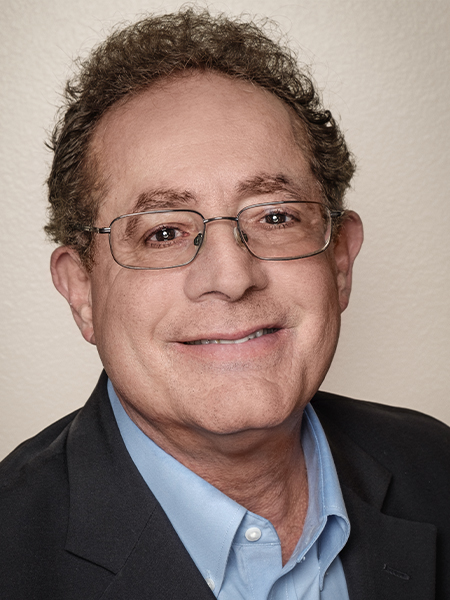
Tom Meaglia, ChFC®, AEP®,
CLU®, CRPC®, MSFS
Chartered Financial Consultant
Investment Advisor Representative
Chartered Retirement Planning Counselor
CA Insurance Lic. #0567507
Meaglia Financial Consulting
2105 Foothill Blvd., #B140, La Verne, CA 91750
Toll Free: 800-386-3700
Bus: 909-593-6105
Cell: 818-681-8600
Fax: 909-593-6120
Email: tom@meagliafinancialconsulting.com
Website: www.meagliafinancialconsulting.com

For many years, financial professionals have recommended that most people delay taking Social Security benefits until age 70. The reason is compelling: Each year you delay beyond your full retirement age increases your monthly benefit by 8% in most cases. For those with a full retirement age of 67, waiting until age 70 boosts your monthly check by 24%.
Second, benefits include built-in inflation protection through annual cost-of-living adjustments (COLAs). By delaying, you receive these increases on a higher base, protecting your purchasing power over decades.
Third, the 8% delayed retirement credit significantly outperforms current interest rates on safe investments. It's a guaranteed return that's hard to match elsewhere — and unlike market investments, it carries no risk of loss.
Deciding when to claim Social Security is one of the most important and irreversible retirement decisions you'll make. The choice will affect your income for the rest of your life. Before deciding, consult your financial advisor and tax professional to ensure the strategy aligns with your overall retirement plan, health, and financial needs.
Source: https://www.ssa.gov/benefits/retirement/planner/delayret.html
Enter your Name and Email address to get
the newsletter delivered to your inbox.
Please include name of person that directed you to my online newsletter so I can thank them personally.
Enter your Name, Email Address and a short message. We'll respond to you as soon as possible.
Thomas Meaglia is an Investment Adviser Representative of Coppell Advisory Solutions LLC, dba, Fusion Capital Management, a registered investment adviser that only conducts business in jurisdictions where it is properly registered, or is excluded or exempted from registration requirements. Registration as an investment adviser is not an endorsement of the firm by securities regulators and does not mean the adviser has achieved a specific level of skill or ability. The firm is not engaged in the practice of law or accounting.
Insurance and annuity products are not sold through Fusion Capital Management. Fusion does not endorse any annuity or insurance product, nor does it guarantee any insurance or annuity performance. Annuity and life insurance guarantees are subject to the claims-paying ability of the issuing insurance company. If you withdraw money from or surrender your contract within a certain time after investing, the insurance company may assess a surrender charge. Withdrawals may be subject to tax penalties and income taxes. Persons selling annuities and other insurance products receive compensation for these transactions. These commissions are separate and distinct from Fusion's investment advisory fees.
Meaglia Financial Consulting and LTM Marketing Solutions, LLC are unrelated companies. This publication was prepared for the publication’s provider by LTM Marketing Solutions, LLC, an unrelated third party. Articles are not written or produced by the named representative.
The information and opinions contained in this web site are obtained from sources believed to be reliable, but their accuracy cannot be guaranteed. The publishers assume no responsibility for errors and omissions or for any damages resulting from the use of the published information. This web site is published with the understanding that it does not render legal, accounting, financial, or other professional advice. Whole or partial reproduction of this web site is forbidden without the written permission of the publisher.